
 by All Health Medical Review Board
More than 25 million adults in the United States live with urinary incontinence — yet fewer than half ever talk to a doctor about it. For many residents of Midwood and Flatbush, the silence around this condition means years of unnecessary discomfort, social withdrawal, and a lower quality of life. If you or someone you love has been quietly managing bladder leakage, know this: it is a medical condition, not an inevitable part of aging, and it is highly treatable. Consulting a qualified urologist in Brooklyn is the most important first step toward regaining control and confidence.
At AllHealth Diagnostic and Treatment Center, we understand how personal and sensitive this topic can be. Our urology team provides compassionate, evidence-based care for patients throughout the Brooklyn community, treating every person with the dignity and respect they deserve.
Visit urinary incontinence urologist in Brooklyn today.
Key Takeaways
- Urinary incontinence has five main types, each with different causes and treatment approaches.
- Women over 50 are most commonly affected, but men, younger adults, and people with chronic conditions can also develop this condition.
- Lifestyle changes, pelvic floor therapy, medications, and minimally invasive procedures are all effective treatment options.
- Early evaluation by a urologist leads to better outcomes and faster relief.
- AllHealth Diagnostic and Treatment Center offers comprehensive urology care in Brooklyn, NY, with appointments available Monday through Saturday.
What Is Urinary Incontinence and Who Does It Affect
It is the involuntary loss of urine. It ranges from occasionally leaking a small amount when you sneeze to having such a sudden, strong urge to urinate that you cannot reach a bathroom in time. It is not a disease on its own but rather a symptom of an underlying condition affecting the bladder, urethra, or surrounding muscles and nerves.
Who is most at risk?
- Women over the age of 50, particularly after menopause or childbirth
- Men with prostate conditions, including enlarged prostate or post-prostatectomy changes
- Adults with diabetes, obesity, or neurological disorders
- Older adults with limited mobility
- People taking certain medications that increase urine production
The condition is more common than most people realize, and it does not discriminate. Comprehending which type you have is essential, because treatment differs significantly depending on the underlying cause.
The Five Main Types of Urinary Incontinence
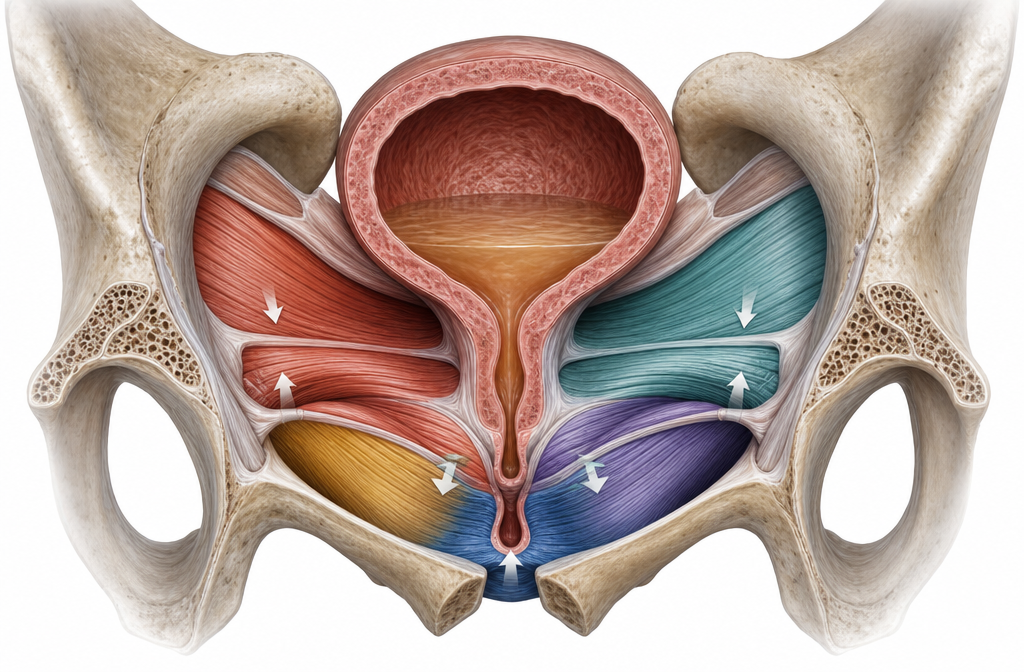
Stress
This occurs when physical movement or activity puts pressure on the bladder. This includes coughing, sneezing, laughing, lifting heavy objects, or exercising. It is the most common type in women and is often linked to weakened pelvic floor muscles following pregnancy, childbirth, or hormonal changes during menopause.
In men, stress it can occur after prostate surgery. The leakage is typically small in volume but can be frequent enough to affect daily life.
Urge (Overactive Bladder)
Urge incontinence, often called overactive bladder (OAB), is characterized by a sudden, intense urge to urinate that is difficult to suppress. Urine loss follows quickly, sometimes before you can reach a restroom. People with this type may urinate eight or more times per day and wake up multiple times at night.
Overactive bladder can be triggered by neurological conditions, bladder infections, or irritants such as caffeine and alcohol. In some cases, no clear cause is identified.
Overflow
Happens when the bladder does not empty completely during urination. The excess urine eventually leaks out in small, frequent dribbles. This type is more common in men and is often associated with an enlarged prostate, bladder stones, or nerve damage caused by diabetes or spinal cord injuries.
A sign of this, is a weak urine stream, a feeling that the bladder never fully empties, or frequent small leaks throughout the day.
Functional
Functional incontinence occurs not because the bladder itself is malfunctioning, but because a physical or cognitive impairment prevents a person from reaching the bathroom in time. Arthritis, severe mobility limitations, Parkinson’s disease, or advanced dementia can all contribute to this type.
This form is particularly common in older adults and those in assisted living situations. It requires a multidisciplinary approach that may involve primary care, neurology, and urology working together.
Mixed
It is a combination of two or more types, most commonly stress and urge incontinence occurring together. This is frequently seen in women and can be more challenging to treat because it requires addressing multiple underlying factors simultaneously.
| Type | Main Trigger | Most Common In |
|---|---|---|
| Stress | Coughing, sneezing, exercise | Women post-childbirth/menopause |
| Urge (OAB) | Sudden urge, no warning | Adults with neurological issues |
| Overflow | Bladder never fully empties | Men with prostate conditions |
| Functional | Mobility or cognitive barriers | Older adults |
| Mixed | Combination of triggers | Women with multiple risk factors |
Common Causes and Risk Factors
Comprehending what causes UI helps a urologist develop the right treatment plan. Causes fall into two broad categories: temporary and chronic.
Temporary causes include:
- Urinary tract infections (UTIs)
- Constipation, which puts pressure on the bladder
- Certain medications, including diuretics, sedatives, and blood pressure drugs
- Dietary irritants such as alcohol, caffeine, spicy foods, and carbonated beverages
Chronic or structural causes include:
- Pregnancy and vaginal childbirth, which weaken pelvic floor muscles
- Hormonal changes during menopause reducing urethral support
- Enlarged prostate (benign prostatic hyperplasia) or prostate cancer treatment
- Neurological conditions such as Parkinson’s disease, multiple sclerosis, or stroke
- Obesity, which increases abdominal pressure on the bladder
- Diabetes causing nerve damage that affects bladder control
- Aging-related changes in bladder capacity and muscle strength
If you are experiencing recurrent urinary tract symptoms, our article on kidney stones and back pain also discusses related urological concerns worth reviewing.
How a Urinary Incontinence Urologist in Brooklyn Diagnoses Your Condition
Accurate diagnosis is the foundation of effective treatment. When you visit our urology services in Brooklyn, your urologist will conduct a thorough evaluation that typically includes:
- Medical history review: Discussing your symptoms, their frequency, triggers, and impact on daily life
- Physical examination: Assessing pelvic floor muscle strength and checking for structural issues
- Urinalysis: Testing urine for infection, blood, or other abnormalities
- Bladder diary: Tracking fluid intake, urination frequency, and leakage episodes over several days
- Post-void residual measurement: Checking how much urine remains in the bladder after urination
- Urodynamic testing: Measuring bladder pressure and function in more complex cases
- Cystoscopy: A camera examination of the bladder interior when structural issues are suspected
This comprehensive approach ensures that your treatment plan is tailored specifically to your type and severity of condition, not a one-size-fits-all protocol.
Treatment Options for Urinary Incontinence

Treatment for UI is highly individualized. A skilled urinary incontinence urologist in Brooklyn will recommend a stepwise approach, starting with the least invasive options and progressing as needed.
Behavioral and Lifestyle Modifications
These are the first line of treatment for most types of incontinence:
- Bladder training: Gradually increasing the time between bathroom visits to retrain the bladder
- Scheduled voiding: Using the bathroom at set intervals to prevent urgency
- Fluid management: Adjusting the timing and amount of fluid intake
- Dietary changes: Reducing caffeine, alcohol, and bladder irritants
- Weight management: Losing excess weight to reduce bladder pressure
Pelvic Floor Physical Therapy
Kegel exercises and pelvic floor rehabilitation are among the most effective treatments for stress and mixed incontinence. A trained physical therapist teaches you to correctly identify, contract, and strengthen the pelvic floor muscles. Consistency is essential — most patients see significant improvement within 6 to 12 weeks.
Our physical therapy services in Brooklyn can be coordinated with urology care for a comprehensive approach.
Medications
Several classes of medications are used to treat it:
- Anticholinergics and beta-3 agonists: Relax the bladder muscle to reduce urge incontinence
- Alpha-blockers: Help men with prostate-related overflow incontinence by relaxing the prostate and bladder neck
- Topical estrogen: Applied locally to strengthen urethral and vaginal tissues in postmenopausal women
- Mirabegron: A newer medication that relaxes the bladder and increases its storage capacity
Minimally Invasive and Surgical Procedures
When conservative treatments are not sufficient, several procedures can provide lasting relief:
- Botox injections into the bladder: Temporarily relax an overactive bladder muscle, effective for urge incontinence
- Nerve stimulation (neuromodulation): Sacral nerve stimulators or percutaneous tibial nerve stimulation regulate bladder signals
- Urethral bulking agents: Injected around the urethra to improve closure in stress incontinence
- Sling procedures: A minimally invasive surgery placing a mesh sling under the urethra to provide support, most effective for stress incontinence
- Artificial urinary sphincter: Used primarily in men after prostate surgery
Addressing Underlying Conditions
Because conditions like diabetes and neurological disorders can directly cause or worsen the condition, managing those underlying diseases is essential. Our team coordinates care across specialties. For example, patients with diabetes may benefit from seeing our endocrinologist in Brooklyn to achieve better blood sugar control, which in turn improves bladder nerve function.
Why Choose AllHealth Diagnostic and Treatment Center for Urology Care
At AllHealth DTC, we believe that no one should suffer in silence. Our urology specialist brings deep expertise in diagnosing and treating all forms of UI from straightforward stress leakage to complex mixed presentations requiring multidisciplinary coordination.
What sets us apart:
- Comprehensive, in-house specialty care: Urology, endocrinology, neurology, physical therapy, and primary care all under one roof
- Culturally sensitive care: Our team serves the diverse Midwood and Flatbush communities with warmth and respect
- Coordinated treatment plans: We work across departments to address every factor contributing to your condition
- Convenient scheduling: Open Monday through Saturday, 9:00 AM to 6:00 PM
For patients who also need regular preventive care alongside their urology treatment, our article on how often you should see an internist offers helpful guidance on building a complete healthcare routine.
FAQs:
Is urinary incontinence a normal part of aging that I just have to accept?
No. While this condition becomes more common with age, it is not an inevitable or untreatable condition. The majority of patients experience significant improvement or complete resolution of symptoms with appropriate treatment. Accepting leakage as “just aging” delays care that could meaningfully improve your quality of life. Schedule an evaluation with a urologist to explore your options.
Can men develop urinary incontinence, or is it only a women’s issue?
Men absolutely develop it, particularly after prostate surgery, with an enlarged prostate, or due to neurological conditions. While women are statistically more affected overall, men represent a significant portion of urology patients seeking treatment for bladder control issues. The types and treatments differ somewhat from those in women, which is why a proper urological evaluation is essential for everyone experiencing symptoms.
How long does it take to see results from pelvic floor exercises?
Most patients who perform pelvic floor exercises correctly and consistently begin to notice improvement within 6 to 12 weeks. The essential word is “correctly” — many people unknowingly perform Kegel exercises incorrectly, which reduces their effectiveness. Working with a trained pelvic floor physical therapist ensures proper technique and significantly improves outcomes. Our physical therapy team can guide you through this process.
When should I see an urologist in Brooklyn rather than just my primary care doctor?
You should consider seeing a urologist if your leakage is frequent, worsening, or significantly affecting your daily activities or sleep. You should also seek urology care if you have blood in your urine, pain during urination, a history of prostate conditions or pelvic surgery, recurrent urinary tract infections, or if initial treatments recommended by your primary care doctor have not provided relief. A urologist has specialized tools and training to diagnose and treat the full spectrum of bladder conditions.
References:
- National Institute of Diabetes and Digestive and Kidney Diseases. (2021). Bladder Control Problems (Urinary Incontinence). U.S. Department of Health and Human Services. https://www.niddk.nih.gov/health-information/urologic-diseases/bladder-control-problems
- Office on Women’s Health, U.S. Department of Health and Human Services. (2022). Urinary incontinence. https://www.womenshealth.gov/a-z-topics/urinary-incontinence
- American Urological Association. (2023). Diagnosis and Treatment of Non-Neurogenic Female Stress Urinary Incontinence: AUA/SUFU Guideline. https://www.auanet.org/guidelines-and-quality/guidelines/stress-urinary-incontinence-(sui)-guideline
- Centers for Disease Control and Prevention. (2022). Urinary Incontinence. https://www.cdc.gov/nchs/fastats/urinary-incontinence.htm
- National Association for Continence. (2023). Types of Urinary Incontinence. https://www.nafc.org/urinary-incontinence
Allhealth in Coney Island Avenue
1100 Coney Island Avenue,
2nd Floor, Brooklyn, NY 11230
Phone: (718) 942-4944
Email: IDD@allhealthdtc.com
Allhealth in East 13th Street
1655 East 13th Street,
Brooklyn, NY 11229
Phone: (718) 339-6900
Email: medical@allhealthdtc.com