Your blood pressure reading is higher than normal, and suddenly you’re wondering, Can I go to urgent care for high blood pressure or is this something more serious? Knowing where to seek care can feel confusing at the moment. In this guide, we’ll explain when urgent care may be appropriate and when emergency care is the safer choice.
Contact heart disease treatment Brooklyn for help.
TL;DR:
Most high blood pressure readings can be managed through primary care, but a sustained reading of 180/120 mm Hg or higher is considered a hypertensive crisis and requires urgent evaluation. Warning signs like chest pain, shortness of breath, severe headache, or neurological symptoms signal a medical emergency. Urgent care can assess, test, and adjust treatment when no organ damage is present, but true emergencies require hospital care. Ongoing follow-up and long-term management are essential to prevent future complications.
When Should High Blood Pressure Require Urgent Care?
High blood pressure is common and usually develops gradually over time. In most cases, elevated readings can be addressed during a scheduled visit with a primary care clinician. Nevertheless, there are situations when blood pressure rises to a dangerously high level or is accompanied by concerning symptoms that require urgent or emergency evaluation.
An essential threshold used by clinicians is a reading of 180/120 mm Hg or higher. This level is often referred to as a hypertensive crisis, which can damage blood vessels and vital organs if not managed promptly. At this point, urgent medical assessment is necessary due to the increased risk of serious complications such as heart attack, stroke, or kidney injury.
Hypertensive crises are divided into two categories:
- Hypertensive urgency: Extremely high blood pressure without clear signs of acute organ damage. Although no immediate organ injury is evident, rapid medical evaluation is still needed.
- Hypertensive emergency: Extremely high blood pressure accompanied by evidence of harm to organs such as the heart, brain, or kidneys. This is a true medical emergency and typically requires immediate hospital-based care.
Not every high reading signals an emergency. Factors such as symptoms, how quickly the pressure increased, and underlying health conditions help determine the level of urgency. Urgent care clinics may be appropriate for markedly high readings without signs of organ damage, while true emergencies require immediate emergency department care or emergency services.
Signs That High Blood Pressure Needs Immediate Attention
High blood pressure often causes no symptoms, but certain warning signs indicate that organs may already be affected. In these cases, immediate medical attention, ideally through emergency services, is necessary.
Symptoms suggesting a hypertensive emergency include:
- Severe chest pain
- Shortness of breath
- Sudden severe headache
- Confusion, dizziness, vision changes, or difficulty speaking
- Weakness, numbness, or paralysis
- Severe anxiety, nausea, or seizures in extreme cases
These signs may reflect damage to critical organs such as the heart, brain, or kidneys and should not be delayed for routine care. Even in the absence of symptoms, a sustained blood pressure reading above 180/120 mm Hg warrants urgent medical evaluation.
How Urgent Care Evaluates Blood Pressure Emergencies
When someone arrives at an urgent care clinic with significantly elevated blood pressure, providers perform a structured and timely evaluation to determine how serious the situation is and whether immediate intervention or hospital transfer is required.
- History and Physical Examination
The evaluation begins with a detailed medical history. Providers ask about when symptoms began, whether there is a history of hypertension, medication use or missed doses, recent health changes, and other existing conditions. This helps distinguish between long-standing uncontrolled hypertension and a sudden spike that may be stressing vital organs. Symptoms such as chest pain, shortness of breath, or neurological changes are carefully reviewed.
A focused physical exam follows, emphasizing vital signs and checking for signs of organ involvement. Clinicians assess heart sounds, lung findings, neurological function, and possible signs of kidney-related complications.
- Blood Pressure Measurement and Re-Measurement
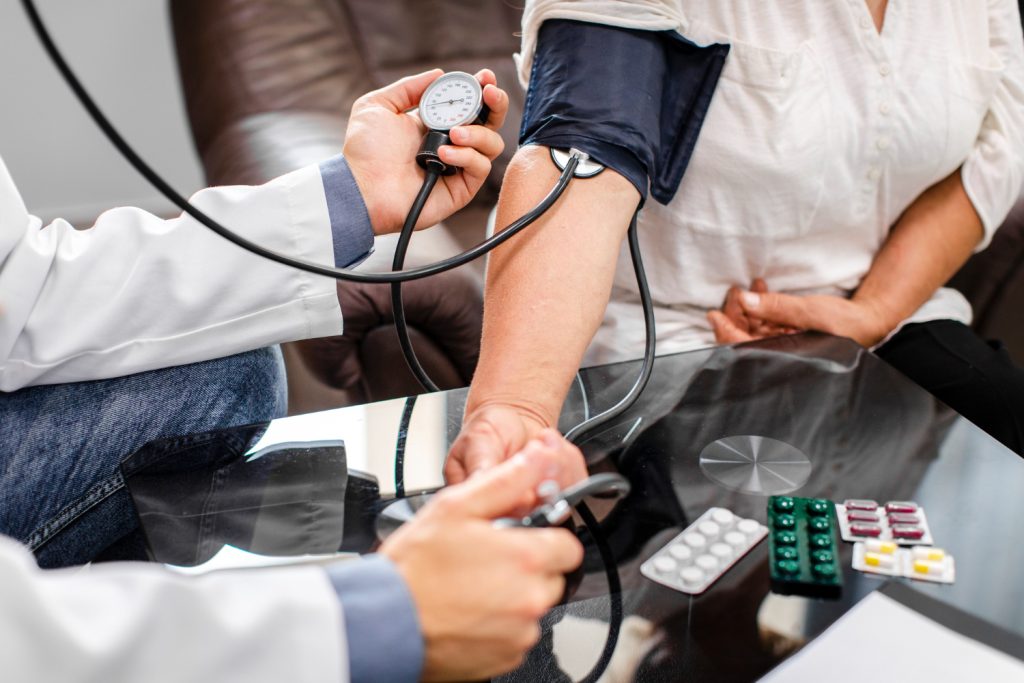
Accurate measurement is essential. Blood pressure is taken using a properly sized cuff after the patient has rested. It may be repeated after several minutes to confirm that the elevation is sustained and not simply a temporary spike related to anxiety or recent activity.
Tests Performed to Check Heart and Kidney Health
If needed, urgent care clinics may perform targeted tests to evaluate for possible complications:
- Electrocardiogram (ECG): To assess heart rhythm and look for signs of heart strain or reduced blood flow.
- Blood tests: To evaluate kidney function (such as creatinine and electrolytes), check cardiac enzymes if chest symptoms are present, and assess overall metabolic status.
- Urinalysis: To detect protein or blood that may indicate kidney involvement.
- Basic imaging (e.g., chest X-ray): If symptoms suggest fluid overload or heart-related issues.
These tests help determine whether elevated blood pressure has caused heart or kidney stress requiring urgent treatment or referral.
Medications and Treatments Given at Urgent Care
If the situation is serious but does not show immediate life-threatening organ damage, urgent care clinicians may begin or adjust treatment.
- Antihypertensive medications may be started or doses adjusted to lower blood pressure gradually and safely over hours to days.
- Short-acting oral medications may be selected based on the individual’s clinical profile.
- Patients may be observed in the clinic to ensure blood pressure responds appropriately.
If providers suspect evidence of end-organ damage, such as heart attack, stroke risk, or kidney failure, they will arrange immediate transfer to a hospital emergency department for advanced care and continuous monitoring.
Follow-Up Steps After an Urgent Care Visit
After an urgent care visit for severely elevated blood pressure, ongoing follow-up is essential to prevent recurrence and protect long-term health. Patients are typically referred to their primary care provider within days to a week for a comprehensive review of cardiovascular risk factors and development or adjustment of a long-term treatment plan.
During follow-up, clinicians reassess and adjust antihypertensive medications, reinforce medication adherence, and incorporate lifestyle counseling such as diet changes, exercise, sodium reduction, and smoking cessation. Regular blood pressure monitoring at home and in clinic visits helps ensure readings remain within a safe range. If complications were suspected, a specialist referral may be recommended.
Education is a main part of post-visit care. Patients are taught to recognize warning signs like chest pain, severe headache, or neurological symptoms and to seek rapid care if they occur. Consistent long-term monitoring and risk factor management significantly reduce the chances of another emergency or serious complications.
Key Takeaways:
- Not all high blood pressure requires emergency care
Most elevated readings can be managed through scheduled primary care visits. Nevertheless, a reading of 180/120 mm Hg or higher is considered a hypertensive crisis and requires urgent evaluation due to the risk of organ damage. - Hypertensive urgency vs. hypertensive emergency
Hypertensive urgency involves extremely high readings without clear organ damage but still needs rapid medical assessment. Hypertensive emergency includes signs of harm to the heart, brain, or kidneys and requires immediate hospital-based care. - Warning signs signal true emergencies
Symptoms such as chest pain, shortness of breath, severe headache, confusion, vision changes, weakness, or seizures may indicate organ involvement. These require immediate emergency services rather than routine urgent care. - Urgent care performs structured evaluations and targeted tests
Clinicians assess medical history, perform physical exams, confirm accurate blood pressure readings, and may order ECGs, blood tests, urinalysis, or imaging to check for heart or kidney complications. - Follow-up care is critical after stabilization
After urgent treatment, patients need prompt primary care follow-up, medication review, lifestyle counseling, and ongoing monitoring. Long-term management reduces the risk of recurrent crises and serious complications like stroke or heart attack.
FAQs:
How high should your blood pressure be to go to urgent care?
A reading of 180/120 mm Hg or higher is considered a hypertensive crisis and requires urgent medical evaluation. If there are no signs of organ damage, urgent care may be appropriate. If symptoms are severe, emergency services are safer.
What happens if you go to urgent care with high blood pressure?
Providers will take a detailed history, repeat blood pressure measurements, and perform a focused exam. They may order tests such as blood work or an ECG and adjust or start medications. If organ damage is suspected, you will be transferred to the emergency department.
Should I go to the hospital if my blood pressure is 140 over 90?
A reading of 140/90 mm Hg is elevated but usually does not require emergency care if you have no symptoms. It can typically be managed through a scheduled primary care visit and ongoing monitoring.
What are the warning signs of high blood pressure?
Severe chest pain, shortness of breath, sudden severe headache, confusion, vision changes, weakness, numbness, or seizures are warning signs. These may indicate organ damage and require immediate emergency medical attention.
You may also like
- What Not to Eat When You Have Hypertension: Key Foods to Avoid
- Can High Blood Pressure Cause Tension Headaches?
- When Should a Woman See an Endocrinologist to Address Hormonal Issues
Sources.
Ahmed I, Alley WD, Chauhan S, et al. Hypertensive Crisis. [Updated 2025 Dec 1]. In: StatPearls [Internet]. Treasure Island (FL): StatPearls Publishing; 2025 Jan-. Available from: https://www.ncbi.nlm.nih.gov/books/NBK507701/
Bress, A. P., Anderson, T. S., Flack, J. M., Ghazi, L., Hall, M. E., Laffer, C. L., Still, C. H., Taler, S. J., Zachrison, K. S., Chang, T. I., & American Heart Association Council on Hypertension; Council on Cardiovascular and Stroke Nursing; and Council on Clinical Cardiology (2024). The Management of Elevated Blood Pressure in the Acute Care Setting: A Scientific Statement From the American Heart Association. Hypertension (Dallas, Tex. : 1979), 81(8), e94–e106. https://doi.org/10.1161/HYP.0000000000000238
Allhealth in Coney Island Avenue
1100 Coney Island Avenue,
2nd Floor, Brooklyn, NY 11230
Phone: (718) 942-4944
Email: IDD@allhealthdtc.com
Allhealth in East 13th Street
1655 East 13th Street,
Brooklyn, NY 11229
Phone: (718) 339-6900
Email: medical@allhealthdtc.com